

Introduction
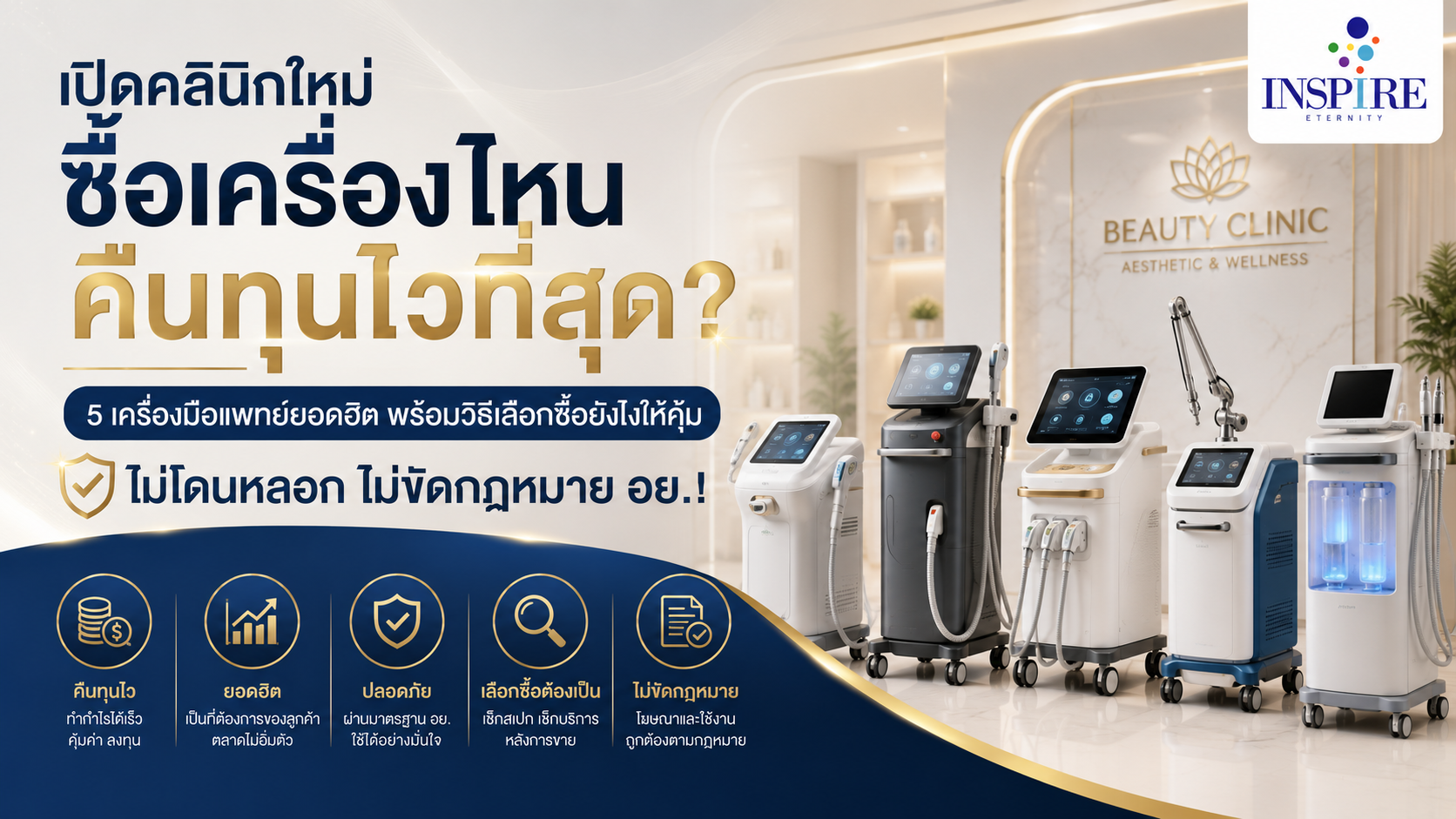
Choosing aesthetic medical devices for a newly opened clinic is one of the most difficult decisions in the startup journey. There are countless options in the market, each carrying a high price tag, and making the wrong choice can severely affect your long-term ROI.
This article doesn't aim to state which machine is absolute best, because that depends heavily on your target demographics and treatments. Instead, we explain the strengths of each device category, which clinic models they suit, and key evaluation criteria you must verify before making any purchase.
⚠️ Note: Always verify that the medical devices hold official clearance from the Food and Drug Administration (FDA). This is critical for patient safety and your clinic's licensing application.
Strategic Framework Before Selecting Equipment
Before looking at options, make sure you answer these four strategic questions:
| Question | Strategic Rationale |
|---|---|
| Who is your primary customer base? | Age, gender, and primary skin concerns determine which treatment options you must provide. |
| What is your core treatment menu? | Your equipment must support your core services directly, rather than purchasing a machine and hoping to build a menu around it. |
| What is the equipment budget? | Determines if you should invest in one major signature system or several smaller ones. |
| Do you have a 2-3 year expansion plan? | If expanding, selecting durable equipment that supports high workloads and has established service centers is key. |
1. Laser Systems
Lasers are usually the first investment for new clinics. Hair removal and skin correction treatments have highly stable year-round demand, and since they require multiple sessions, they secure predictable, recurring revenue.
Core Laser Applications
- Laser Hair Removal — The highest demand category. Patients usually commit to 6-8 sessions.
- Pigmentation & Skin Toning — Highly popular among Asian skin profiles to treat freckles, melasma, and sunspots.
- Fractional Skin Resurfacing — High margin per session, ideal for acne scars and pore reduction.
- Carbon Laser Peel — Popular among younger clients for acne management and oil control.
Common Laser Technologies to Know
| Laser Type | Key Strengths | Best Fit For |
|---|---|---|
| Diode Laser | Highly effective hair removal across multiple skin tones; excellent safety profile. | Clinics building their core menu around hair removal. |
| Nd:YAG Laser | Versatile system supporting hair removal, vascular lesions, and pigment treatment. | Clinics needing multi-purpose clinical utility. |
| Fractional CO2 | Deep scar treatment, pore refining, and epidermal correction. | Clinics focused on skin resurfacing. |
| Picosecond Laser | Extremely fast pigment fragmentation and tattoo removal with minimal heat damage. | Premium clinics offering advanced skin rejuvenation. |
* Summary for general planning. Work closely with medical advisors and manufacturers to match laser wavelengths with your treatment goals.
2. HIFU (High-Intensity Focused Ultrasound)
HIFU delivers focused ultrasound waves to stimulate collagen production in deep skin layers, achieving non-surgical skin tightening and lifting. It is highly sought-after by clients aged 30+ seeking anti-aging treatments.
Business Strengths
- Higher retail price per session compared to lasers, securing excellent margins.
- Patients repeat treatments every 6-12 months, maintaining strong retention.
- Attracts high-income demographics interested in preventative aging.
- Zero downtime makes it an easy choice compared to invasive surgical lifts.
What to Audit When Buying HIFU Systems
- Number of transducers/cartridges included and the exact consumable cost per session.
- Available depth penetration levels (e.g., 1.5mm, 3.0mm, 4.5mm) to support different areas.
- Thai FDA registration and international compliance credentials (such as CE or FDA Clearance).
- The importer's track record and quality of their local technical support teams.
⚠️ Warning: Counterfeit or low-grade HIFU systems are common. Ensure your system holds active FDA clearance and is imported by a registered distributor.
3. IPL (Intense Pulsed Light)
IPL uses broad-spectrum light to target multiple skin concerns in one system, making it a highly cost-effective option for startups seeking treatment flexibility on a budget.
IPL Applications
- Hair removal — highly effective on fair to medium skin tones.
- Photorejuvenation — targets sunspots, light freckles, and redness.
- Acne care — reduces active inflammation and clears acne marks.
- General skin brightening.
IPL vs. Laser: Crucial Differences
| Feature | IPL | Laser |
|---|---|---|
| Treatment Scope | High versatility — treats pigmentation, hair, and acne in one. | Specific — depends heavily on laser wavelength. |
| Precision | Moderate — broad-spectrum light disperses wider. | High — targets specific structures with high energy. |
| Skin Tone Safety | Best for fair to medium tones. | Depends on wavelength (some safe for deep tones). |
| Acquisition Cost | Generally lower. | Generally higher. |
4. Body Contouring and Fat Reduction
Body contouring is one of the fastest-growing segments in Thailand's aesthetic market. Consumers are increasingly investing in body aesthetics alongside facial treatments.
Core Technologies
- Cryolipolysis (Fat Freezing) — Non-invasive fat reduction with zero downtime.
- HIFU Body — Targeted ultrasound to destroy fat cells and tighten loose skin.
- Radiofrequency (RF) Body — Skin tightening, body shaping, and cellulite reduction.
- Electromagnetic Muscle Stimulation — Builds muscle tone; popular among active demographics.
Best Fit For
Clinics looking to expand their revenue per visit. Body contouring attracts a demographic that might not seek facial treatments, and existing skin patients often add shaping treatments to their visits.
5. Radiofrequency (RF) Systems
RF devices use radiofrequency energy to heat the dermis, stimulating collagen to firm loose skin. It is a time-tested, highly safe technology with a very high acceptance rate among risk-averse clients.
Key Strengths
- Very safe, painless, and carries zero downtime.
- Applicable to both face and body areas.
- Highly compatible with long-term skincare maintenance packages.
- Evolving technology — modern systems combine RF with microneedling or ultrasound for enhanced results.
6 Key Criteria to Audit Before Buying Any Device
- Thai FDA Clearance — Check the official FDA database to verify that the device is registered.
- International Standards — Confirm certifications like CE Marking (Europe) or FDA Clearance (USA).
- Authorized Importer — Verify that the importer holds official distribution and registration credentials.
- After-Sales Service — Audit warranty terms, spare part availability, and local technician response times.
- Consumable Cost — Request detailed per-session cartridge/tip costs, as they directly impact your profit margins.
- Clinical Training — Confirm the supplier provides thorough training for your clinical team and ongoing medical support.
Red Flags to Avoid When Buying Equipment
- Unusually Low Prices — Quality medical manufacturing carries clear costs. Extremely cheap machines are often copycats or dangerous low-grade units.
- No FDA Documentation — Reject the machine immediately. Unregistered devices cannot be used legally.
- No Local Support Teams — If a machine breaks down, waiting for parts from overseas means weeks of costly clinic downtime.
- High-Pressure Sales Tactics — Reputable suppliers give you time to verify credentials and check references.
- No Demo Support — You should always be able to test the device or observe a clinical demo before committing capital.
Frequently Asked Questions (FAQ)
Q: How many devices should a startup clinic buy?
For new clinics on a budget, investing in 1-2 high-quality core devices is far safer than buying multiple cheap systems. Once cash flow stabilizes, you can scale your equipment list. Keep remaining funds as working capital.
Q: Are multi-function machines better than single-purpose ones?
Not necessarily. While multi-function systems offer versatility, their individual functions are often less powerful than dedicated systems. If you want a signature treatment, go for a specialized machine.
Q: What are the risks of buying used medical equipment?
Used devices carry significant risks, including voided warranties, unknown operating histories, and potential FDA transfer issues. Always have used devices inspected by a certified technician before purchase.
Q: How much clinical training is needed before launching?
This depends on the system complexity. A reputable supplier should provide a full training program covering clinical theory, practical hands-on operation, and safety protocols before you treat your first client.
Conclusion
Choosing the right medical devices is not about finding the most expensive system, but matching technology with your target demographics, clinical menu, and budget, while securing a supplier that supports you long-term.
Inspire Eternity imports and distributes premium aesthetic devices certified to international standards. Our team is ready to help you plan the ideal device mix for your clinic.